
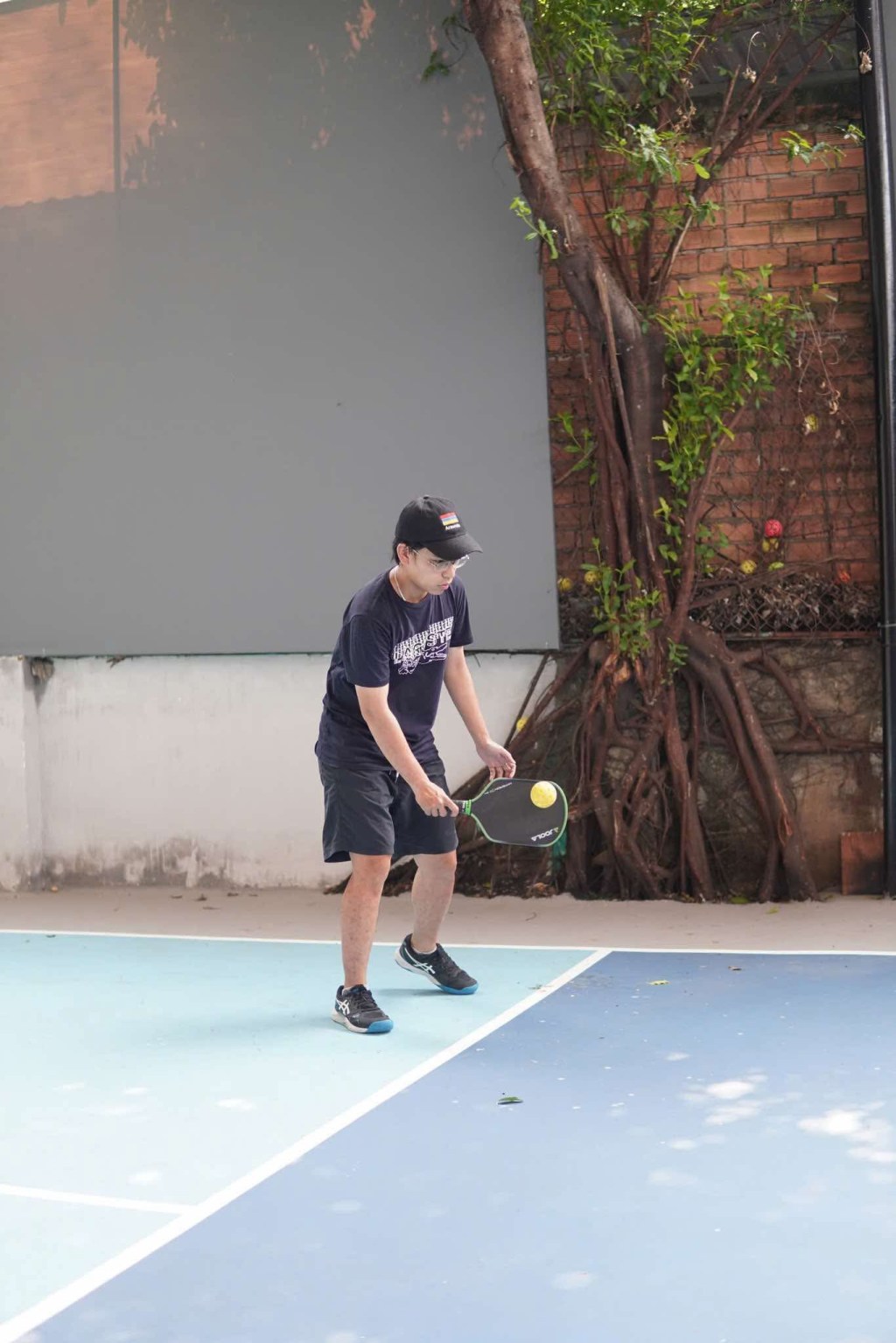
“The backhand dink is undoubtedly one of the most important skills for intermediate-level players and above, as opponents often target the backhand side. Having a consistent backhand dink is key to winning.”
The one-handed backhand dink
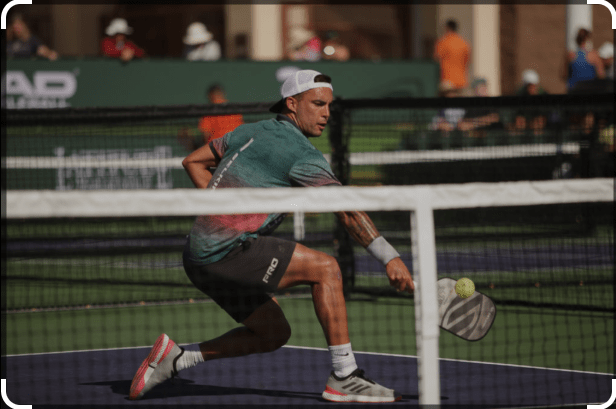
Proper Foot Position for a Backhand Dink:
- Stay Low and Balanced:
- Bend your knees slightly — don’t just lean over with your upper body.
- Keep your weight on the balls of your feet for quick movement.
- Staggered Stance:
- Your non-dominant foot (the one opposite your paddle hand) should be slightly forward.
- This helps you maintain balance and easily adjust your position.
- Step In:
- As you prepare to hit the backhand dink, step forward with your non-dominant foot.
- This allows you to stay in control without overreaching.
- Adjust and Pivot:
- If the ball is wider, pivot on your back foot and sidestep — never cross your feet, or you’ll lose balance.
- Ready Position After the Shot:
- After hitting the dink, return to your ready position quickly—knees bent, paddle up, and eyes on the ball.
The double-handed backhand dink
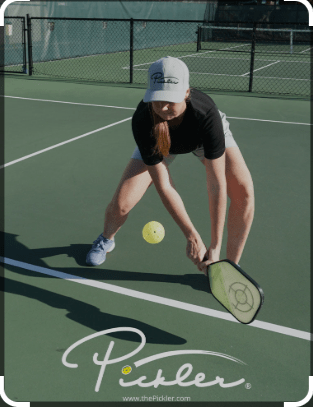
The double backhanded dink refers to a controlled, soft shot executed with both hands on the paddle using a backhand grip. This technique is useful for added stability, control, and power, especially when reaching for low or wide balls near the non-volley zone (kitchen).
Key Points for a Double Backhanded Dink:
✔ Grip – Use both hands on the paddle for better stability.
✔ Foot Position – Stay low with knees slightly bent and weight balanced.
✔ Paddle Control – Maintain a soft touch, aiming for a low and controlled shot over the net.
✔ Follow Through – A gentle, short motion to keep the ball in play.
 Pickleball Saigon-Certified Pickleball Coach HCM/SG
Leave a comment